Lice vs. Dandruff: How to Tell the Difference
You’re brushing your child’s hair before school and notice white flakes on their scalp. Your stomach drops. Is it dandruff? Or is it lice?
If you’re feeling that familiar spike of panic, take a breath. You’re not alone. Thousands of parents face this exact moment every day, and the confusion is completely normal. Dandruff and lice can look similar at first glance, but once you know what to look for, the differences become crystal clear.
By the end of this post, you’ll know exactly how to tell lice apart from dandruff, what signs to watch for, and when it’s time to call in professional help. Let’s break it down.
The Key Differences at a Glance
Here’s the quick version. If you’re in a hurry or just need the facts fast, this is what separates lice from dandruff:
Dandruff:
- White or yellowish flakes on the scalp
- Falls off easily when you brush or shake the hair
- Sits on the scalp surface, not stuck to hair strands
- Often comes with dry, itchy, or oily scalp
- Not contagious
Lice:
- Tiny oval eggs (nits) glued to individual hair strands
- Nits are yellow, tan, or white and will NOT brush off
- Adult lice are grayish-brown and about the size of a sesame seed
- Usually found close to the scalp, where it’s warm
- Live bugs move quickly when you part the hair
- Highly contagious
The biggest difference? Dandruff flakes off. Lice eggs stick like glue.
What Dandruff Looks Like
Dandruff is dead skin that sheds from the scalp. It’s annoying, itchy, and sometimes embarrassing, but it’s not contagious and it’s not a sign of poor hygiene.
When you look at dandruff up close, you’ll see white or slightly yellowish flakes scattered across the scalp. Some flakes might be stuck in the hair, but they’re not attached to the hair shaft itself. If you run your fingers through your child’s hair or give it a gentle shake, dandruff will fall out like snow.
Dandruff often occurs alongside other scalp symptoms. The scalp might look dry and flaky, or it could be oily and irritated. You might notice redness or general scalp sensitivity. If your child has been using a new shampoo, spending time in dry winter air, or dealing with skin conditions like eczema, dandruff becomes even more common.
The key thing to remember: dandruff comes off easily. A quick brush or a shake of the head, and those flakes are gone.
What Lice Look Like
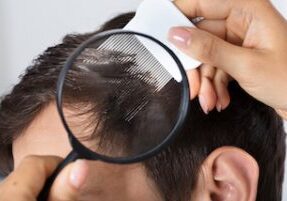
Lice are a different story. If you’re dealing with lice, you’re looking at live bugs and their eggs, called nits.
Nits are the first thing most parents notice. These are tiny, oval-shaped eggs about the size of a pinhead. They’re usually yellow, tan, or white, and glued to individual hair strands near the scalp. Nits don’t fall off when you brush. They don’t shake loose. They stay put because female lice secrete a cement-like substance that bonds the egg to the hair shaft. You have to physically pinch and slide a nit down the hair strand to remove it, and even then, it takes effort.
Adult lice are harder to spot because they move fast. They’re about the size of a sesame seed, grayish-tan in color, and they scurry away from light when you part the hair. You’re most likely to find them near the nape of the neck, behind the ears, or along the hairline where the scalp stays warm.
Lice feed on blood from the scalp several times a day, which is what causes the itching. That itch isn’t immediate, though. It can take 4-6 weeks after the initial infestation for the itching to start, which is why lice often spread before anyone realizes they’re there.
Here’s the bottom line: if you see something stuck to a hair strand that won’t come off with a gentle tug, it’s probably a nit.
The “Tug Test” – How to Know for Sure
When you’re not sure what you’re looking at, try this simple test.
The Tug Test:
- Find a white or yellowish speck on a hair strand.
- Try to slide it off with your fingers.
- If it comes off easily, it’s dandruff (or lint, or dried hair product).
- If you have to pinch it between your fingernails and pull hard to move it, it’s likely a nit.
Dandruff flakes crumble or slide right off. Nits resist. They’re glued on tight, and they require real effort to remove.
If you’ve done the tug test and you’re still not sure, that’s okay. When in doubt, get a professional lice check. A trained technician can do a full head check in minutes and give you a clear answer. It’s faster, less stressful, and way more reliable than guessing.
When to Get a Professional Lice Check
Some situations call for expert eyes. Here’s when you should skip the guesswork and schedule a professional check:
If you see anything stuck to the hair shaft. Even if it’s just one or two nits, it’s worth confirming. Lice infestations start small, and catching them early makes treatment faster and easier.
If the itching won’t go away. If your child has been scratching for days or weeks, and dandruff shampoo isn’t helping, lice could be the cause.
If there’s been an exposure. Got a note from school or daycare about a lice case? If your child was in close contact with someone who had lice, a check is a smart move even if you don’t see symptoms yet.
If you’ve tried treating and you’re not sure it worked. DIY lice treatments can miss nits, and if even a few survive, the infestation comes right back. A professional check confirms whether treatment worked or if a follow-up is needed.
At Lice Knowing You, we offer fast, thorough lice checks in a calm, judgment-free environment. We know this moment is stressful, and we’re here to give you clear answers and a solid plan. If it’s lice, we’ll handle it. If it’s not, you’ll leave with peace of mind.
Frequently Asked Questions
Can you have both lice and dandruff at the same time?
Yes, absolutely. Having dandruff doesn’t protect you from lice, and having lice doesn’t mean you can’t also have a flaky scalp. They’re completely unrelated conditions. If your child has both, you’ll need to treat each one separately. Use a dandruff shampoo for the flakes and follow a proper lice removal protocol to get rid of the bugs and nits.
Do lice cause dandruff?
No. Lice don’t cause dandruff, and dandruff doesn’t cause lice. Lice feed on blood, not dead skin. The itching from lice comes from an allergic reaction to lice saliva, not from dry skin or flaking. If you’re seeing flakes along with signs of lice, they’re two separate issues happening at the same time.
Can dandruff shampoo kill lice?
No. Dandruff shampoo is designed to treat fungal or bacterial scalp conditions and reduce flaking. It has no effect on lice. If you want to kill lice, you need a treatment specifically formulated for lice, or you need professional removal. Using the wrong product wastes time and lets the infestation grow.
How long does it take for lice to spread?
Lice spread through direct head-to-head contact. It only takes a few seconds of contact for a louse to crawl from one head to another. Once lice are on a new host, they start laying eggs within 24-48 hours. Each female louse can lay up to 10 eggs per day, so an infestation can grow quickly if it’s not caught early. This is why lice spread so fast in schools, daycares, and sports teams.
What to Do Next for Lice vs Dandruff
If you’ve made it this far, you now know more about the difference between lice and dandruff than most parents ever will. You know what to look for, how to test for it, and when to ask for help.
Here’s the truth: whether it’s lice or dandruff, both are treatable, and neither one is a reflection on you as a parent. Kids get lice. Scalps get flaky. It happens. What matters is how you respond, and now you’re prepared.
Still not sure what you’re dealing with? Schedule a professional lice check with Lice Knowing You. We’ll give you a clear answer in minutes, and if it is lice, we’ll take care of it the same day. No judgment. No stress. Just fast, effective help when you need it most.